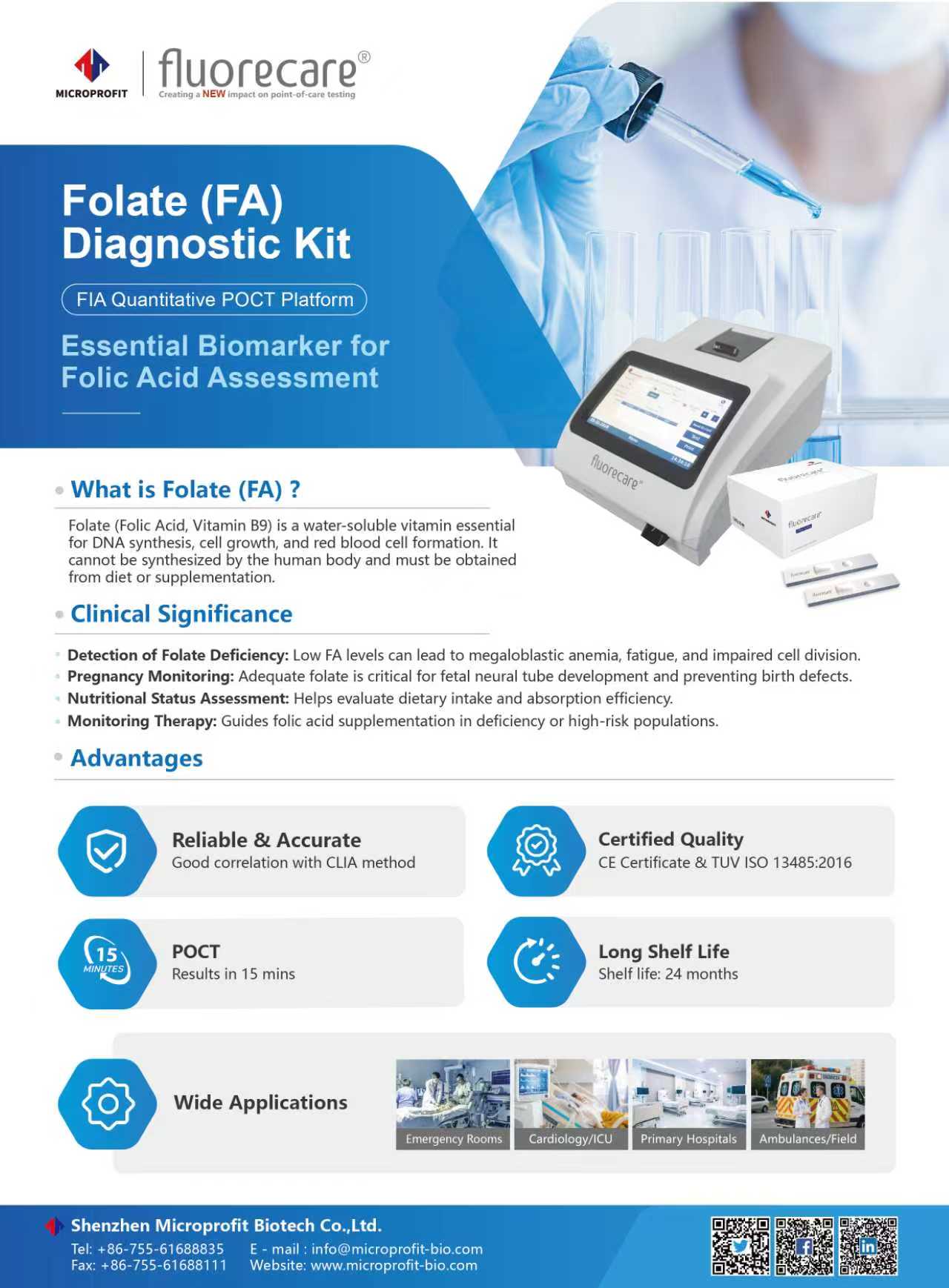
Folate (FA): Essential Biomarker for Folic Acid Assessment
Overview
Folate (FA)
Since folate cannot be synthesized by the human body, it must be obtained through dietary sources (such as leafy greens, legumes, and fortified grains) or nutritional supplementation. Deficiency in folate can lead to impaired cell production and systemic health complications.
Clinical Significance
1. Detection of Folate Deficiency
Low serum folate concentrations are associated with megaloblastic anemia, characterized by fatigue, pallor, and enlarged red blood cells due to defective DNA synthesis.
Folate testing is therefore essential for diagnosing nutritional anemia and differentiating it from vitamin B12 deficiency.
2. Pregnancy and Fetal Health Monitoring
Adequate folate levels are critical during pregnancy for neural tube development in the fetus. Insufficient folate intake is linked to neural tube defects (NTDs) and other congenital abnormalities. Regular monitoring helps guide maternal supplementation strategies and ensures optimal fetal outcomes.
3. Nutritional Status Assessment
As an indicator of dietary intake and intestinal absorption efficiency, serum folate testing provides valuable information on nutritional health. It is particularly useful for evaluating malnutrition, malabsorption syndromes, and diet-related deficiencies.
4. Therapy Monitoring
Folate measurement is important in monitoring supplementation therapy for patients with deficiency, anemia, or high-risk populations such as pregnant women, elderly individuals, or those with chronic illness. Tracking FA levels ensures the efficacy and safety of treatment regimens.
Analytical Advantages
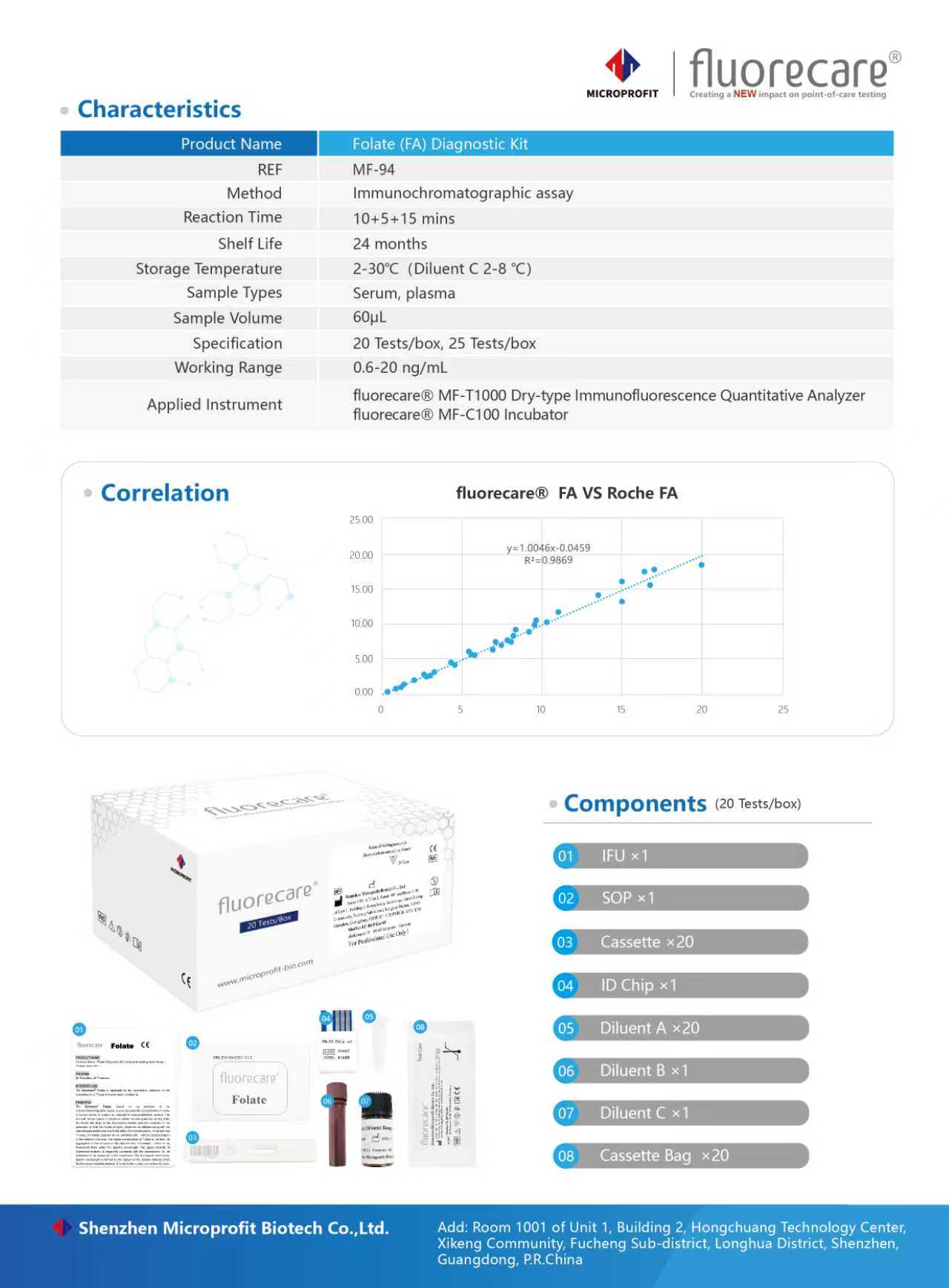
fluorecare® Folate (FA) Diagnostic Kits based on fluorescent immunoassay (FIA) or POCT (Point-of-Care Testing) platforms allow rapid, precise, and quantitative detection of serum folate levels.
Key features include:
-
High analytical sensitivity and reproducibility
-
Quantitative detection within 10+5+15 minutes
-
Applicable to serum or plasma samples
-
Suitable for use in clinical laboratories, obstetrics departments, nutrition centers, and POCT facilities
These characteristics make FA testing an integral part of IVD diagnostic solutions for nutritional and hematologic evaluation.
Conclusion
As an essential micronutrient biomarker, Folate (Vitamin B9) plays a vital role in supporting cell growth, DNA synthesis, and hematopoiesis. Accurate folate measurement is indispensable for diagnosing nutritional deficiencies, monitoring pregnancy health, and guiding therapeutic supplementation.
Incorporating FA testing into clinical workflows enhances preventive care and supports better outcomes in anemia management and maternal-fetal health.